


2 September 2025 – Russia and China have signed a landmark 30-year gas deal, the centrepiece of which is the ‘Power of Siberia-2’ pipeline. The agreement, signed during the Shanghai Cooperation Organisation (SCO) summit, is being seen as a major shift in Moscow’s energy strategy. After deteriorating relations with Europe, Russia is now focusing on China, hoping that its future revenues will be secured from China’s growing energy demand.
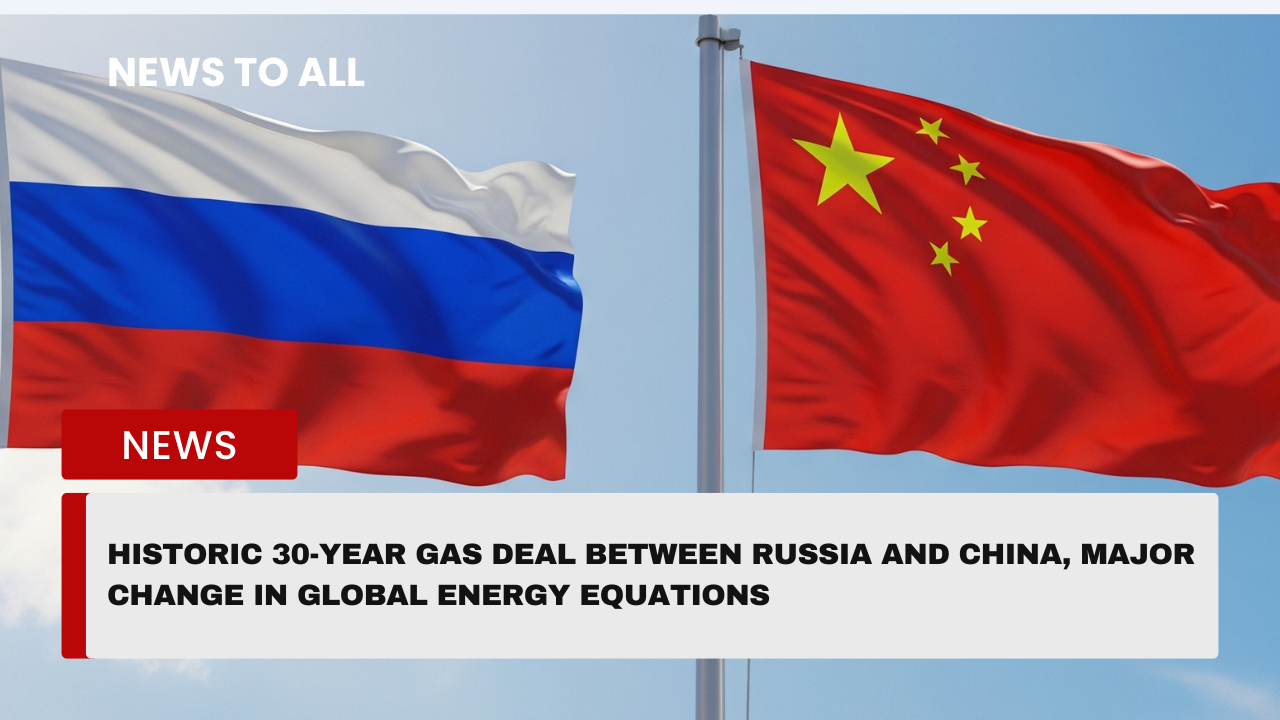
The announcement was made by Alexei Miller, CEO of Russian gas giant Gazprom, after talks between President Vladimir Putin and Chinese President Xi Jinping. Apart from the new pipeline, the two countries have also agreed to increase supplies through the already operational ‘Power of Siberia-1’ pipeline, which could increase from 38 billion cubic meters to 44 billion cubic meters annually.
The pipeline will supply about 50 billion cubic meters of gas annually from Russia’s Yamal gas fields in western Siberia to China via Mongolia. This is almost the same amount that the ‘Nord Stream-1’ pipeline supplied to Europe before the sanctions and sabotage. Many analysts believe that this agreement is not a new bold move, but a “survival strategy” for the Kremlin, a much-needed source of revenue at a time when European buyers have significantly reduced their dependence on Russian gas.
However, some experts are also unsure about how much of this gas China really needs. Beijing is also simultaneously investing heavily in renewable energy, LNG imports and nuclear power. While this pipeline certainly diversifies its supplies and reduces its dependence on coal, it also ties China into a long-term deal with Russia. Whether this will be an advantage or a hindrance will depend on how global energy markets evolve over the next decade.
From Beijing’s point of view, this agreement provides stability. Stable gas coming by pipeline is seen as less risky than disruptions to maritime shipping. Gazprom has indicated that the price for gas will be “objectively lower than the price Europe previously paid” due to the shorter transport distance. However, the final terms of the deal are still confidential, and China is known for its hard bargaining power. Some analysts believe Russia, desperate for buyers, may have offered China favourable prices it may not want to accept.
The deal has caused a stir in Western capitals. Europe, which was once heavily dependent on Russian supplies, is unlikely to ever return to that dependence after Moscow turns east. The US, which had sought to form a united front to weaken Russia’s economy, will see this as a setback, a reminder that sanctions, however painful, can prompt countries to form alternative alliances. Washington has not yet issued an official statement, but given the Trump administration’s recent confrontation over India’s purchase of Russian oil, a sharp response is likely.
It remains to be seen whether the ‘Power of Siberia-2’ will truly reshape global energy flows. In theory, it cements a deep Russia-China partnership and reflects their resistance against Western dominance. In practice, pipelines take years to build and political winds can change quickly. For now, however, the agreement marks another step toward an emerging, more fragmented world order – a world where economic and security blocs are no longer primarily defined by the West.


